Storage has become cheap and persistent. Files accumulate across devices, and most people simply carry everything forward without the time or tools to meaningfully revisit or reorganize their growing digital archives. The dominant interaction model for managing all of this has barely changed: a desktop metaphor built around folder hierarchies and keyword search, rooted in paradigms from the 1970s. These tools work fine when you remember a filename or know where you put something. They break down when your recollection is vague, semantic, or visual, which, for large personal collections, it usually is.
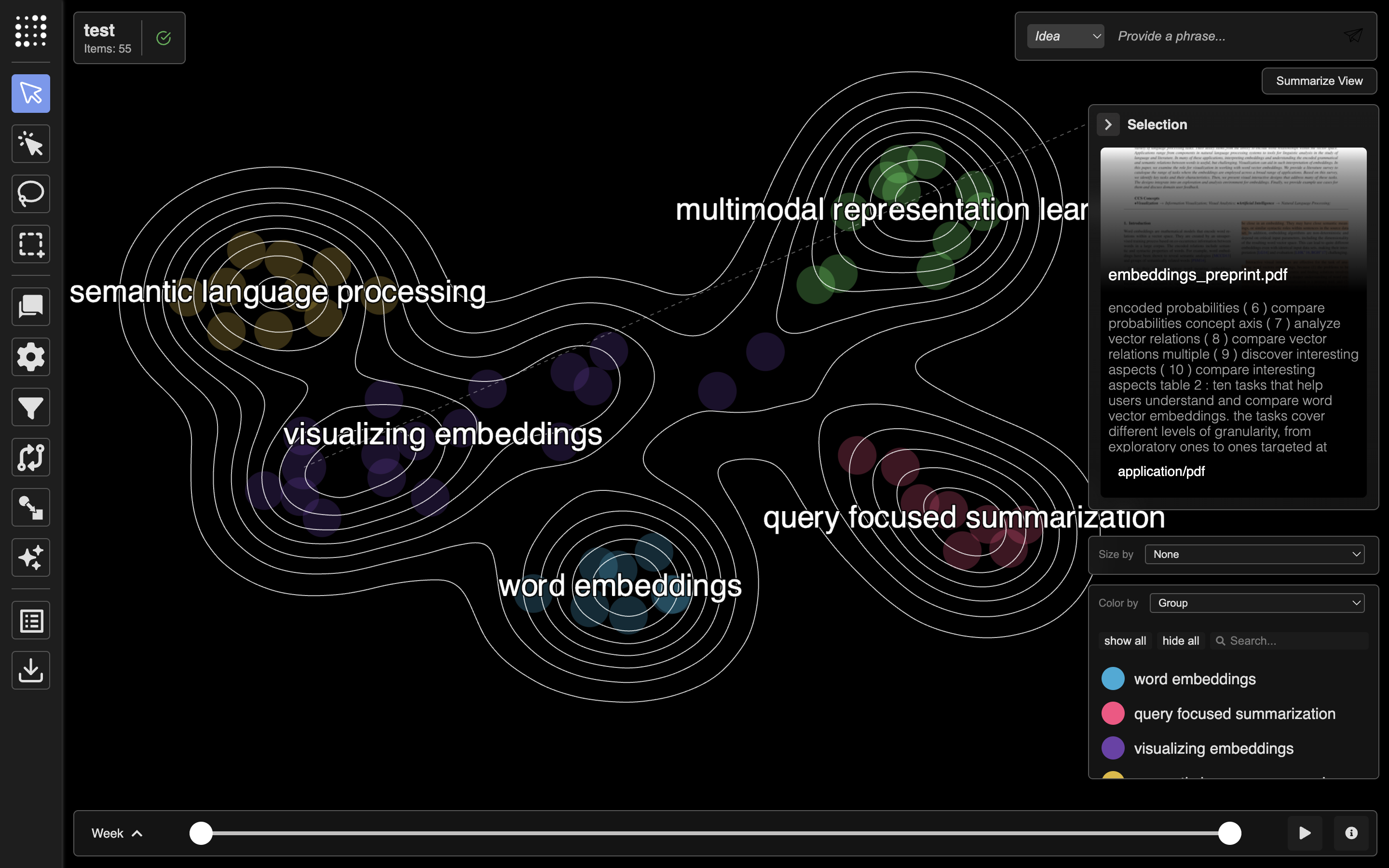
filescape is a Latent Lab embodiment that reimagines personal file management as spatial exploration. Developed in collaboration with Aashna Majmudar at ETH Zurich, it is a desktop application that transforms a user-selected folder into a continuously synchronized semantic map. Documents and images are embedded using lightweight, fully local models (nomic-embed-text for text, nomic-embed-vision for images), reduced to 2D with UMAP, and rendered as an interactive landscape where proximity reflects meaning rather than file path. The result is an at-a-glance overview of an entire collection, where related files cluster together regardless of where they happen to sit in the folder hierarchy.
A core design constraint was privacy. Everything runs on-device: embedding generation, topic extraction, image processing, and language model inference. No data leaves the user's machine. No cloud services, no external API calls. filescape treats the local filesystem as the source of truth, maintaining references to files in their original locations rather than duplicating them into a separate storage layer.
The system monitors the filesystem in real time, so when files are added, renamed, or deleted, the map updates accordingly. Users can open any document directly in its native application with a single click, or command-click to reveal its location in Finder. This tight integration with existing workflows was important: filescape is not trying to replace the file system, but to give you a way to see it that the desktop metaphor cannot.
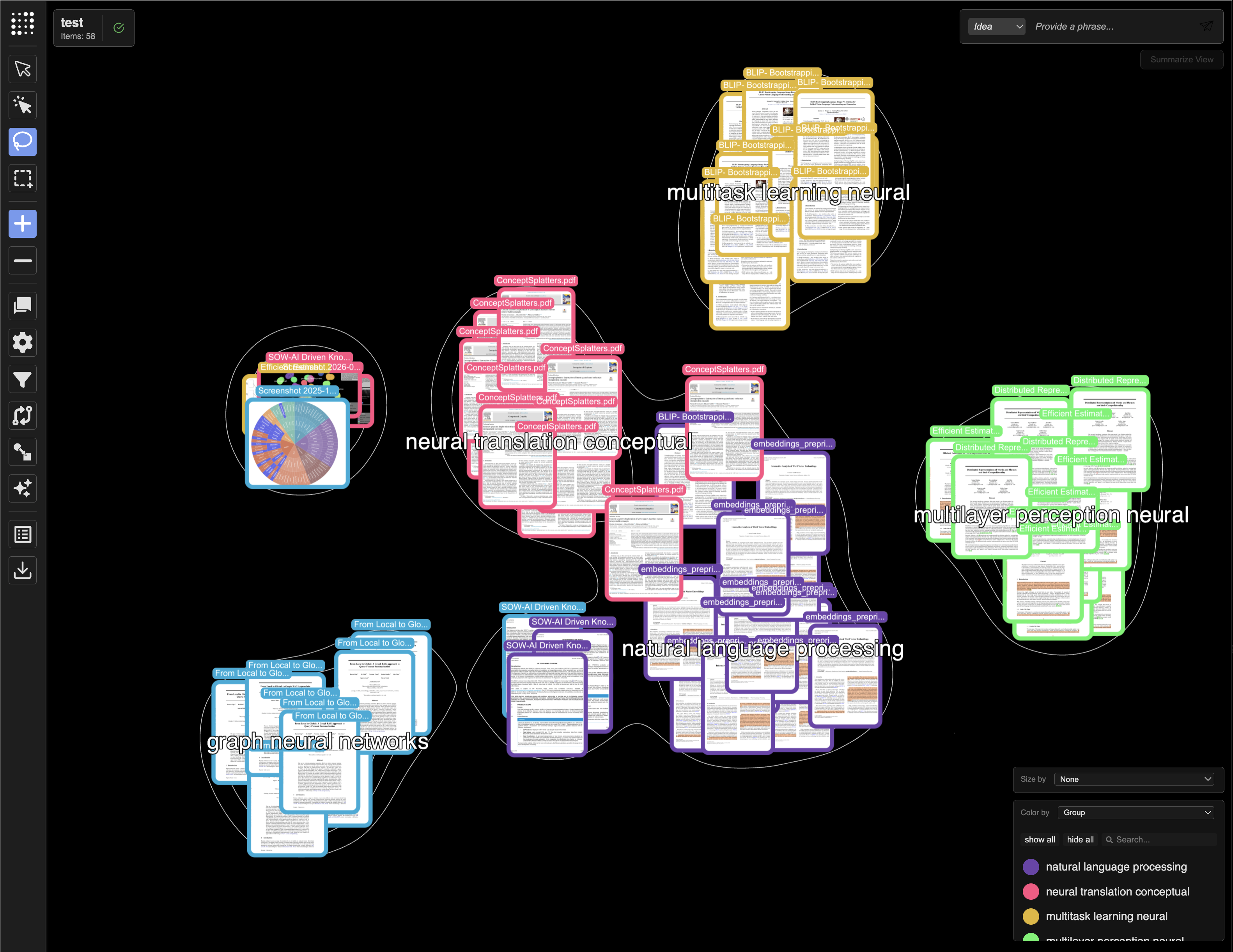
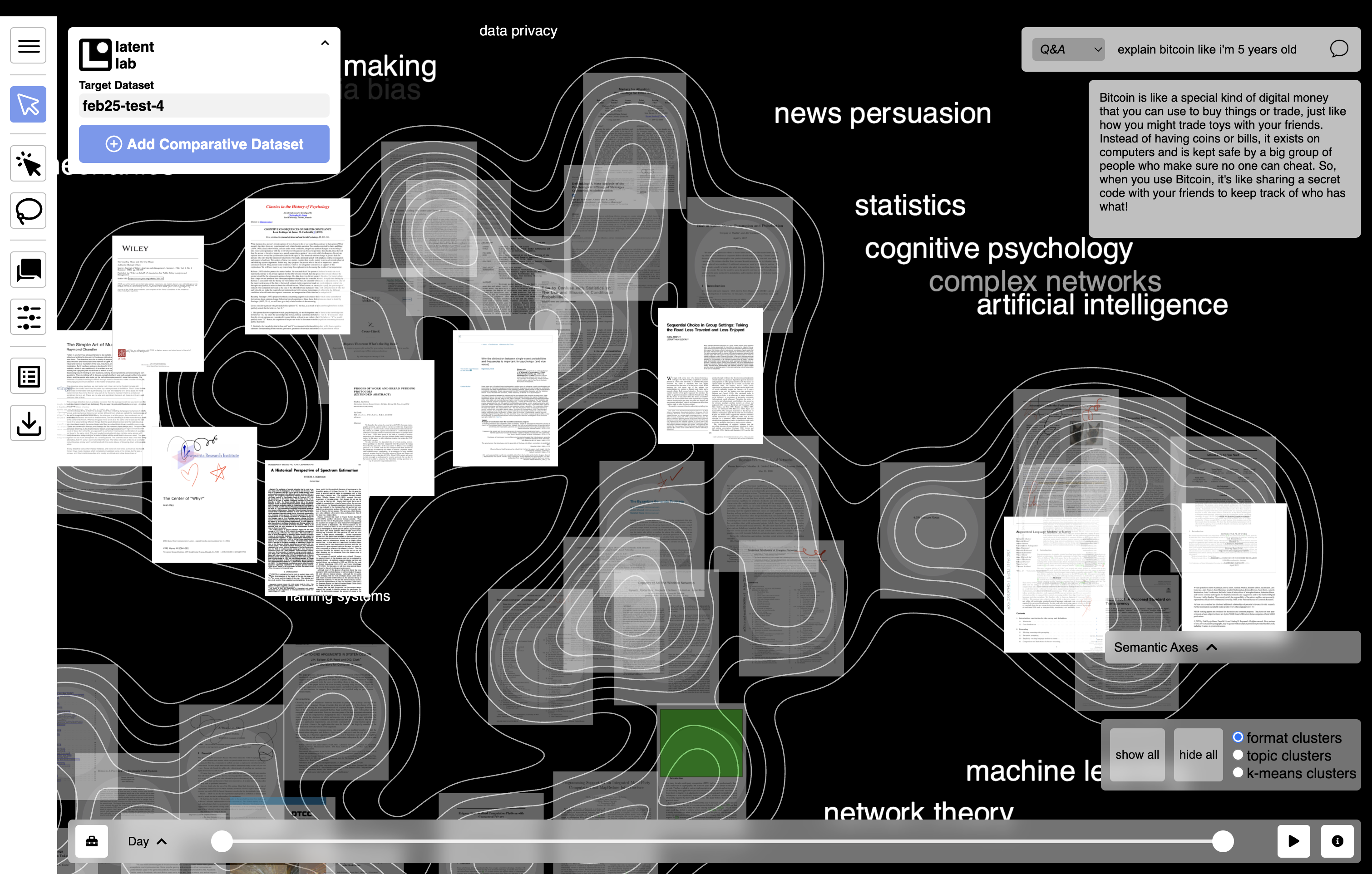
As you zoom in, abstract dots are progressively replaced by WYSIWYG thumbnails of the actual documents, supporting recognition-based navigation. Interactive clustering (both topic-based and k-means) can be toggled to overlay semantic groupings onto the map. A locally running language model (llama3.2:1b) generates topic labels and summaries at both the document and dataset level.
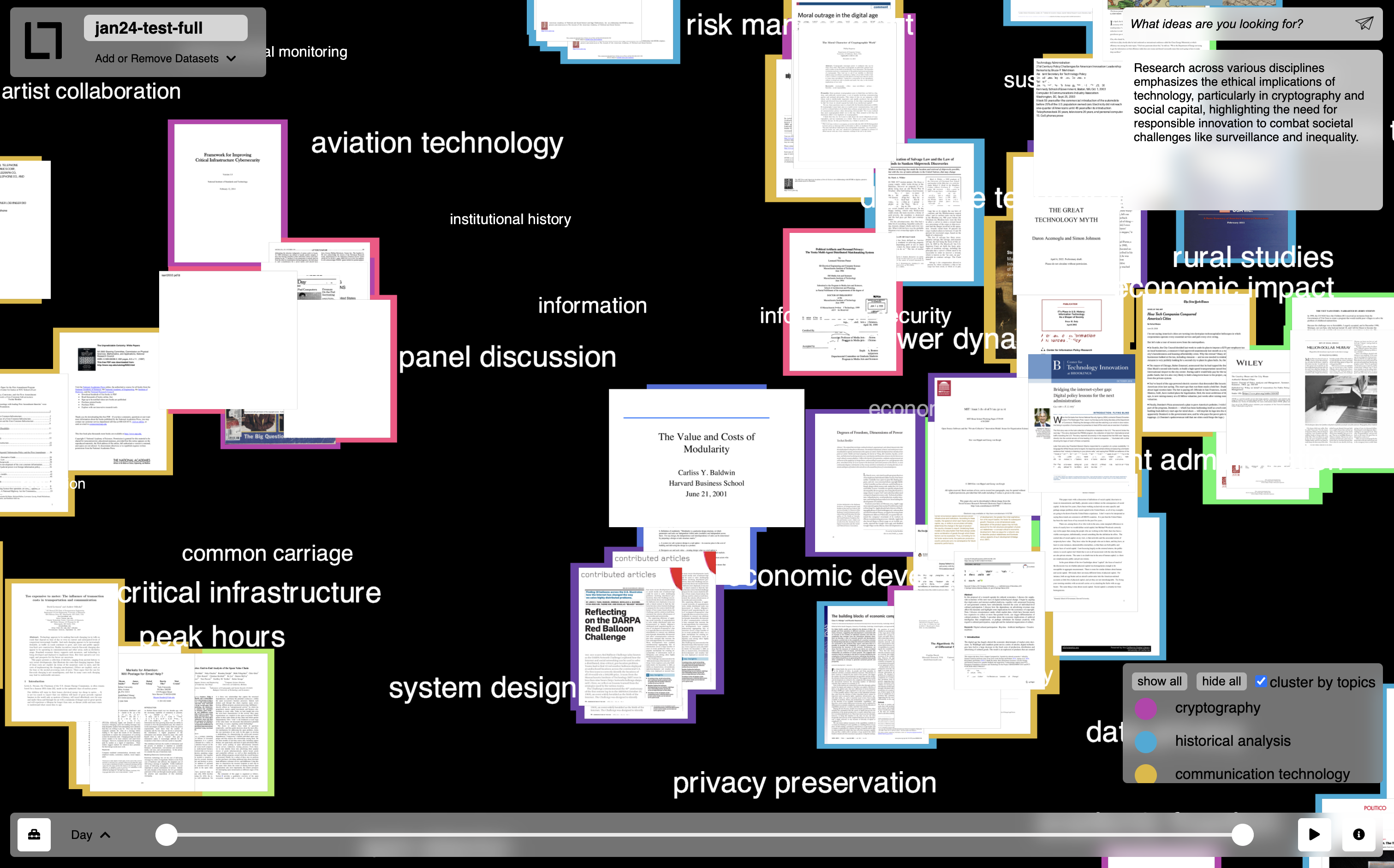
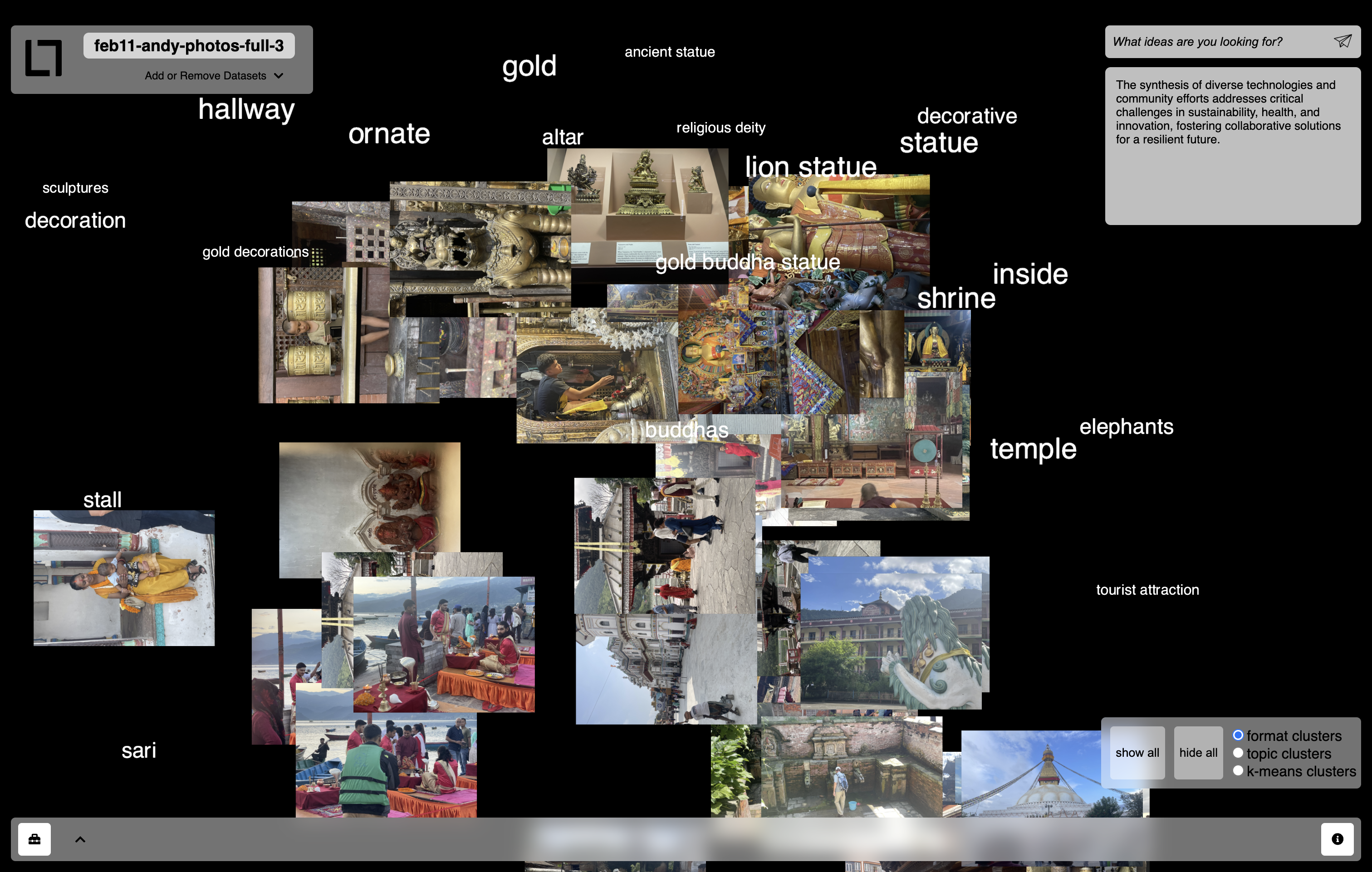
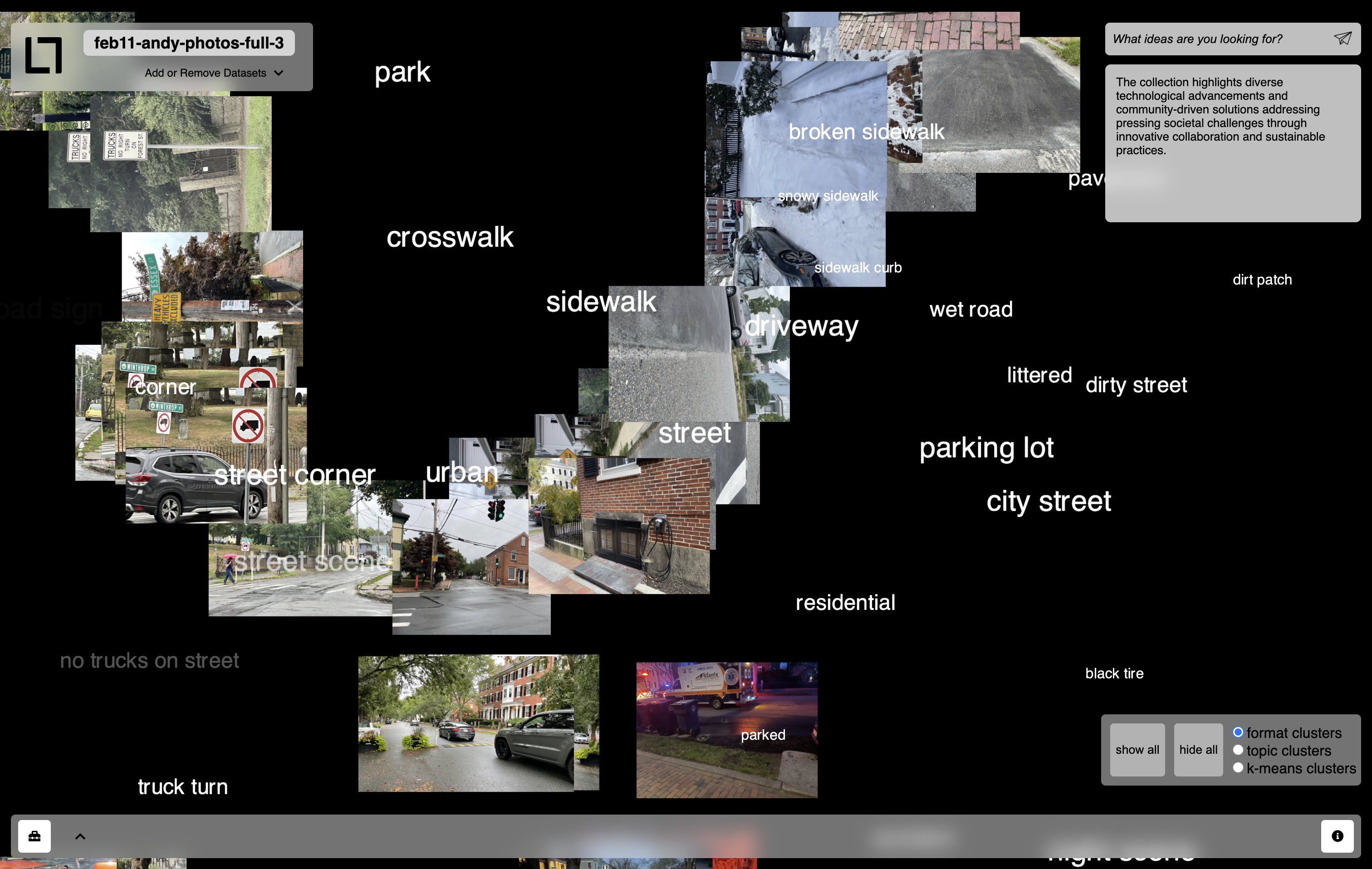
In a pilot study comparing filescape to macOS Finder with 12 participants across 12 retrieval tasks, filescape supported more effective semantic and group-based retrieval (F1 of 0.86 vs. 0.74) while remaining competitive on literal single-file lookups. Finder showed a 10.4% task abandonment rate versus 4.9% for filescape, concentrated in semantic tasks where keyword search returned irrelevant results. Subjective measures favored filescape as well: SUS scores of 75.0 vs. 63.3, and significantly lower mental demand and frustration on NASA-TLX. Participants consistently highlighted the semantic map, thumbnails, and clustering overlays as particularly useful for understanding dataset structure and discovering related documents.
Gallery
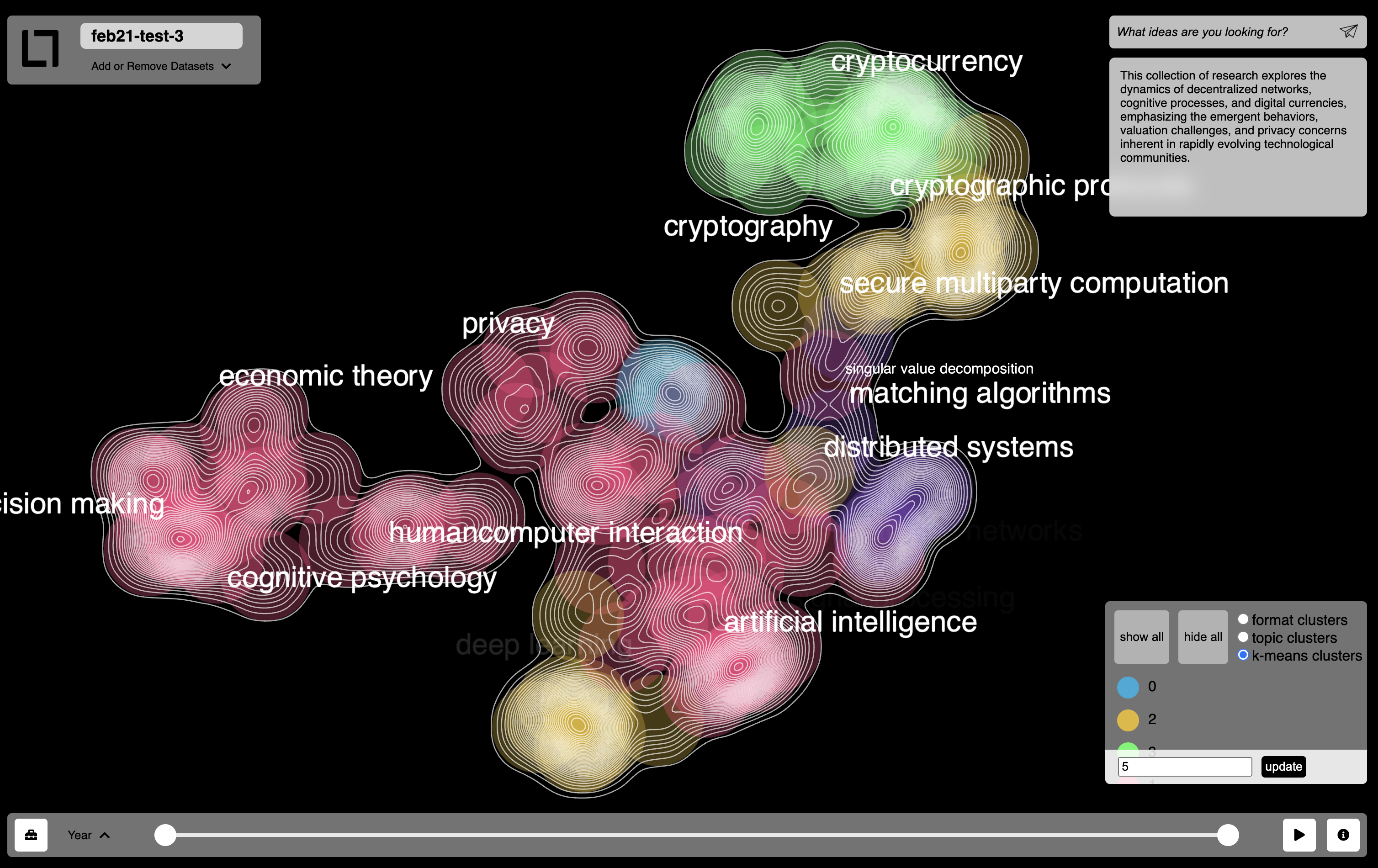
Topographic contour map with topic and k-means clustering overlays across research papers
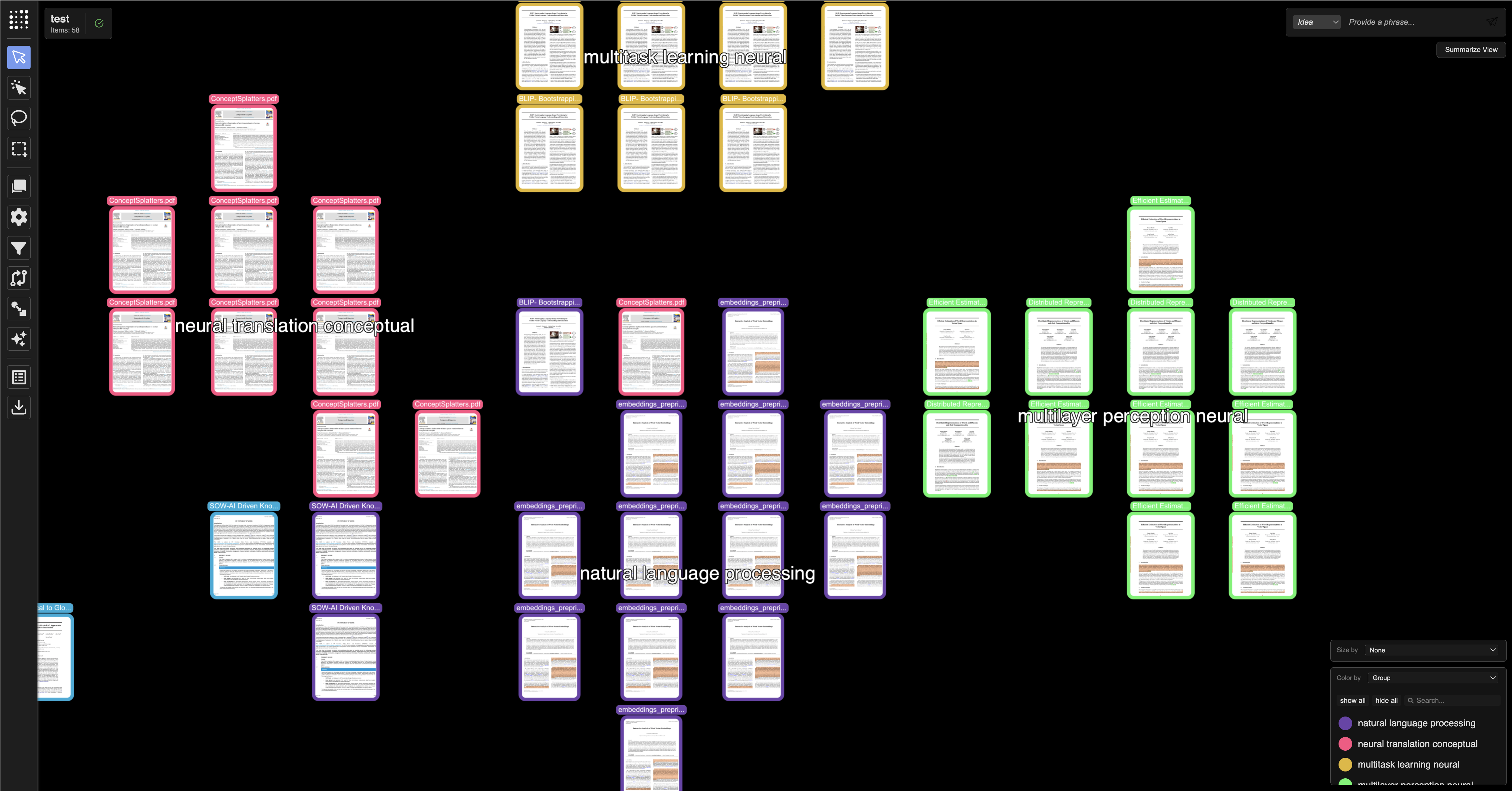
Sorted grid view organizing documents by cluster with color-coded topic groups
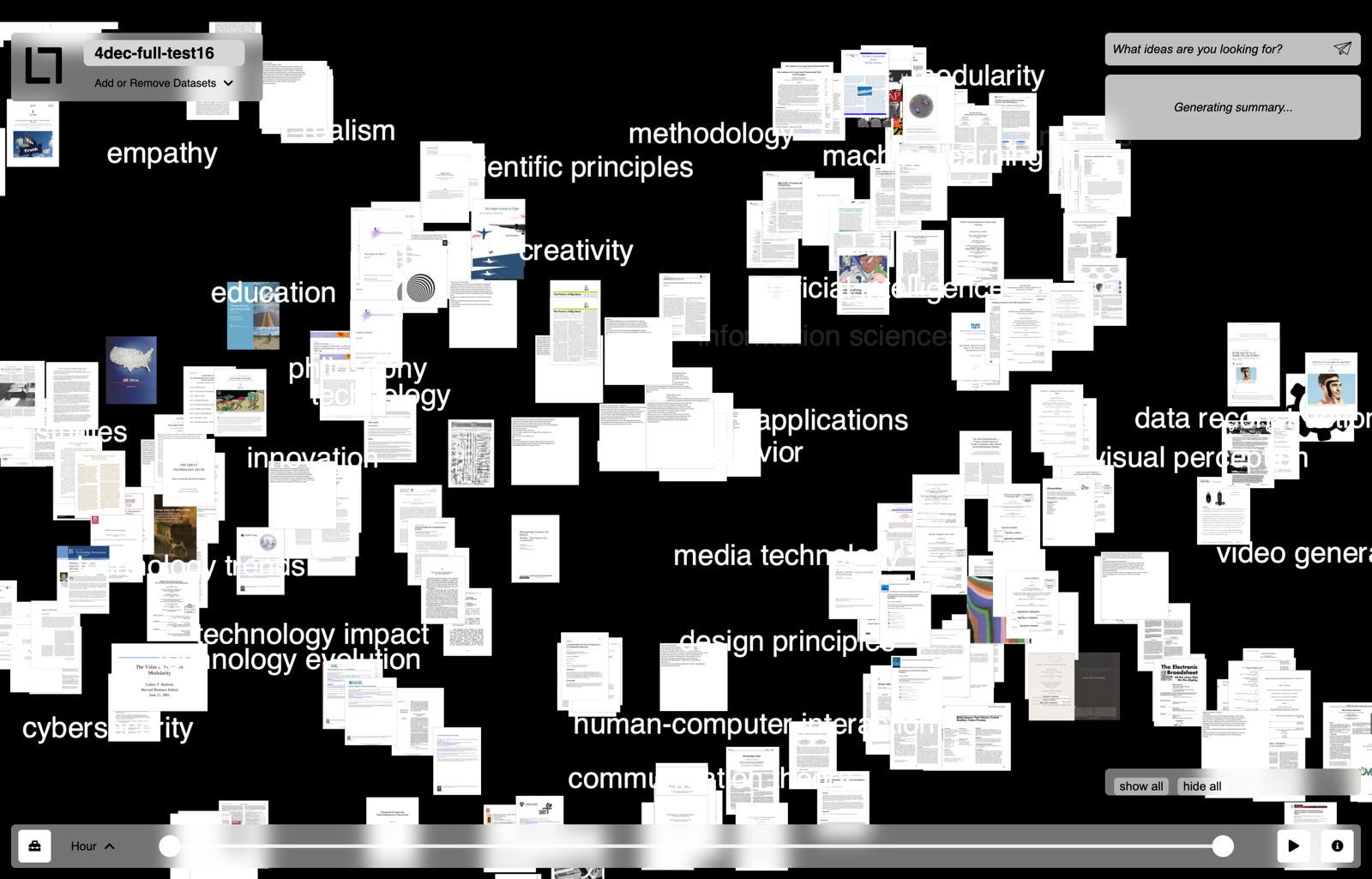
Early filescape prototype generating a dataset summary from document thumbnails
Publications
- filescape: A Non-Hierarchical, Privacy-Preserving Visual AI System for Personal File Organization and Exploration
March 2026 · ACM IUI (Conference on Intelligent User Interfaces)