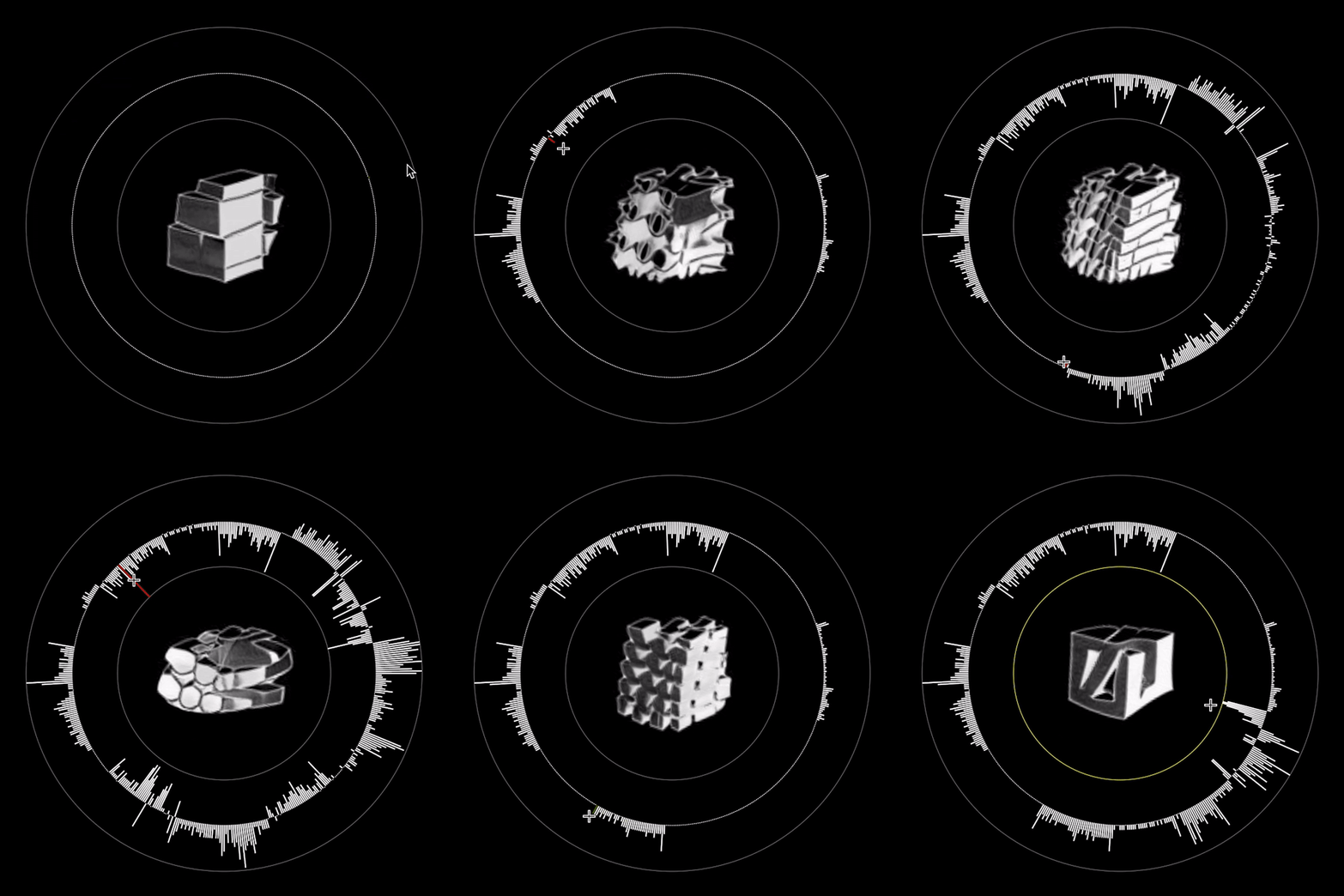
Form Forge started in Zach Lieberman's Drawing++ course at the Media Lab, where I became interested in what it would feel like to interact directly with the latent space of a generative model. Most tools for working with GANs at the time relied on projected navigation landmarks or text prompts, which abstract away the underlying parameters. I wanted to give users direct access to the variables that actually shape the output.
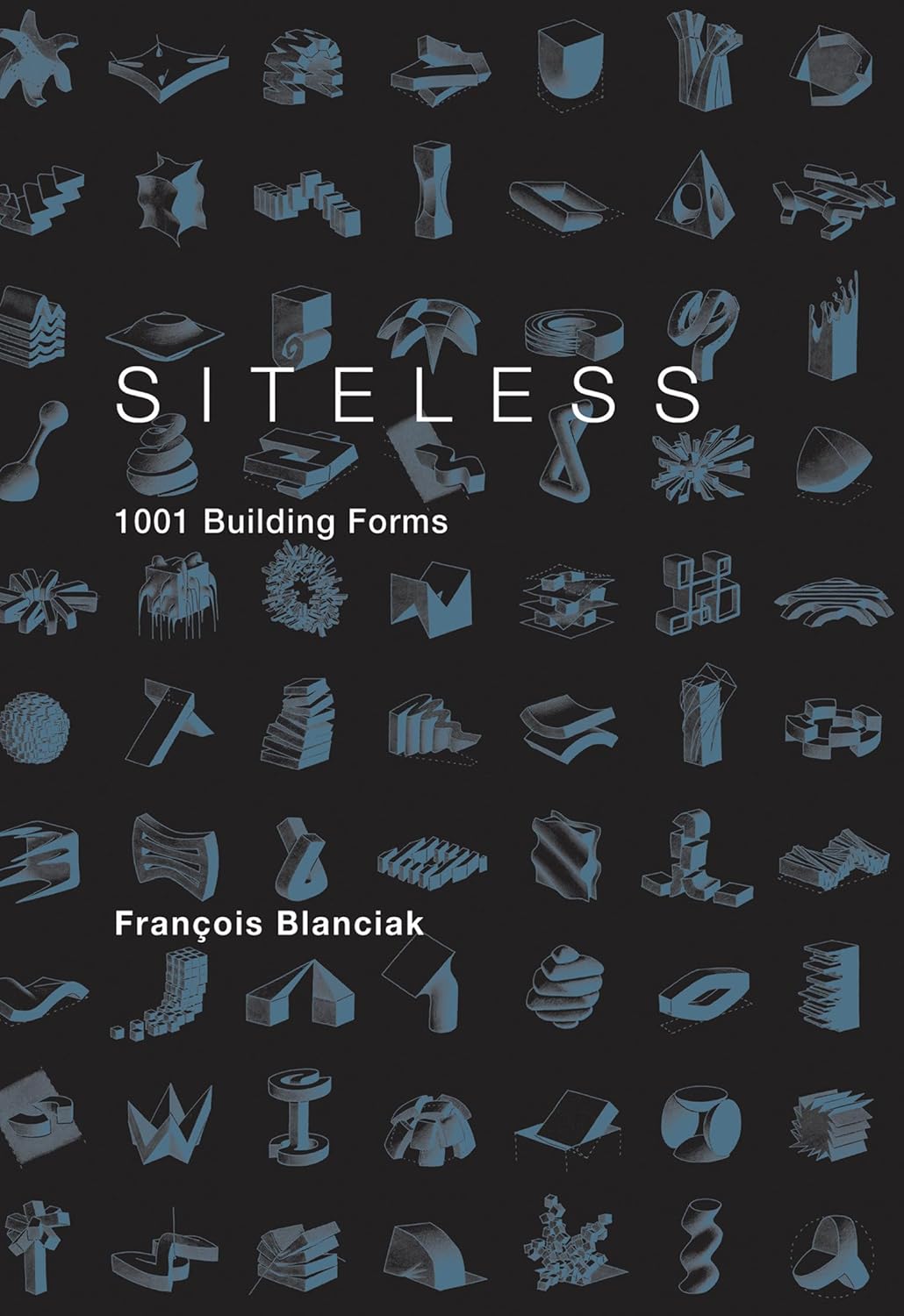
The project is inspired by François Blanciak's book SITELESS: 1001 Building Forms, a collection of hand-sketched architectural forms that felt like it was begging to be expanded. I manually captured all 1,017 sketches from the book, standardized them (white on black, 512x512), and used them to fine-tune a StyleGAN2-ADA model. The result is a continuous latent space of architectural forms that extends Blanciak's finite catalog into a seemingly boundless design space.
The interface places the generated form at the center, surrounded by a ring of 512 dynamic tick marks, each mapped to one of the model's latent variables. Moving the cursor outward from the ring increases a variable's influence; moving inward decreases it. The effect on the generated form is immediate. Users can save forms they find interesting to a carousel, adjust sensitivity and decay rates, and watch the form smoothly interpolate as variables shift. It is a fundamentally different interaction model from typing a prompt or dragging a slider: you are sculpting in high-dimensional space, and the feedback loop is tight enough that you develop an intuitive feel for how the latent dimensions relate to visual structure.
A key challenge is that the latent space is not yet disentangled for this dataset, so the mapping between individual variables and visual outcomes can be unpredictable. This is an open area of work, but even in its current form, the system demonstrates something I think is important: generative models can be creative partners that give designers agency and control rather than replacing them with a text box.
Gallery
Linear interpolation between seeds 85, 265, 297, and 849
Linear interpolation between seeds 463 and 470
Circular loop interpolation around seed 90
Noise loop interpolation around seed 100
Publications
- Form Forge: Latent Space Exploration of Architectural Forms via Explicit Latent Variable Manipulation
July 2024 · ICCC (International Conference on Computational Creativity)