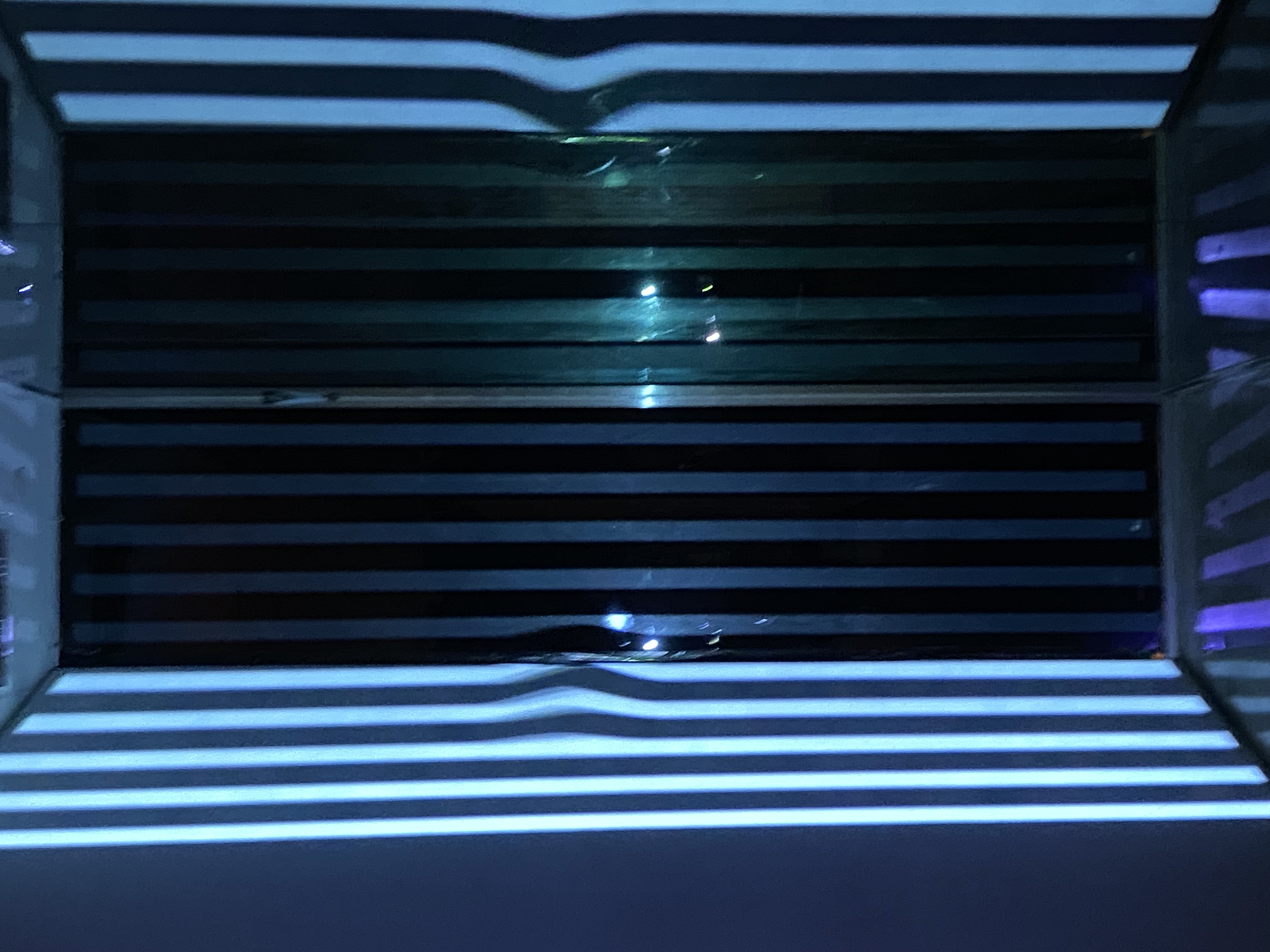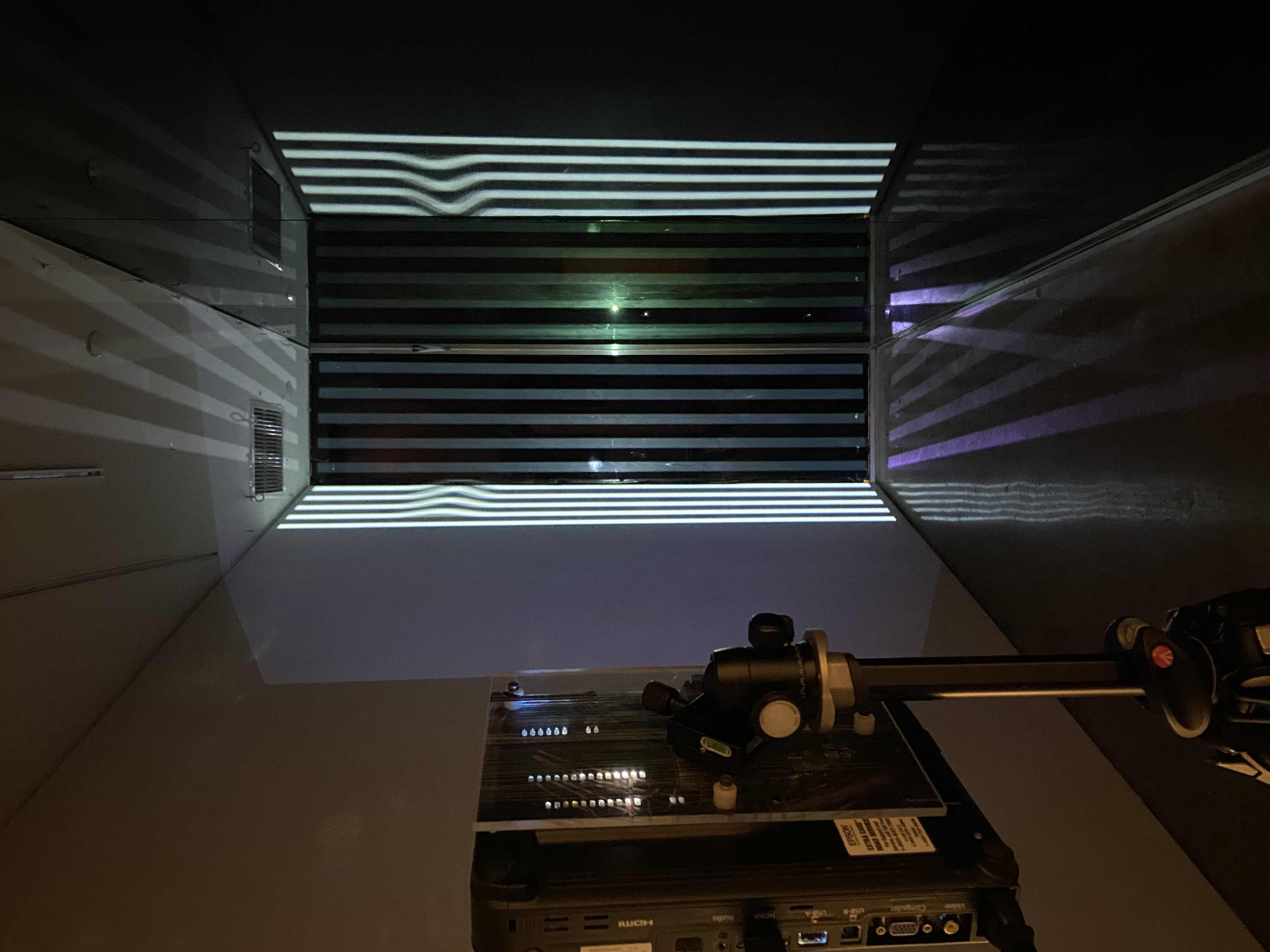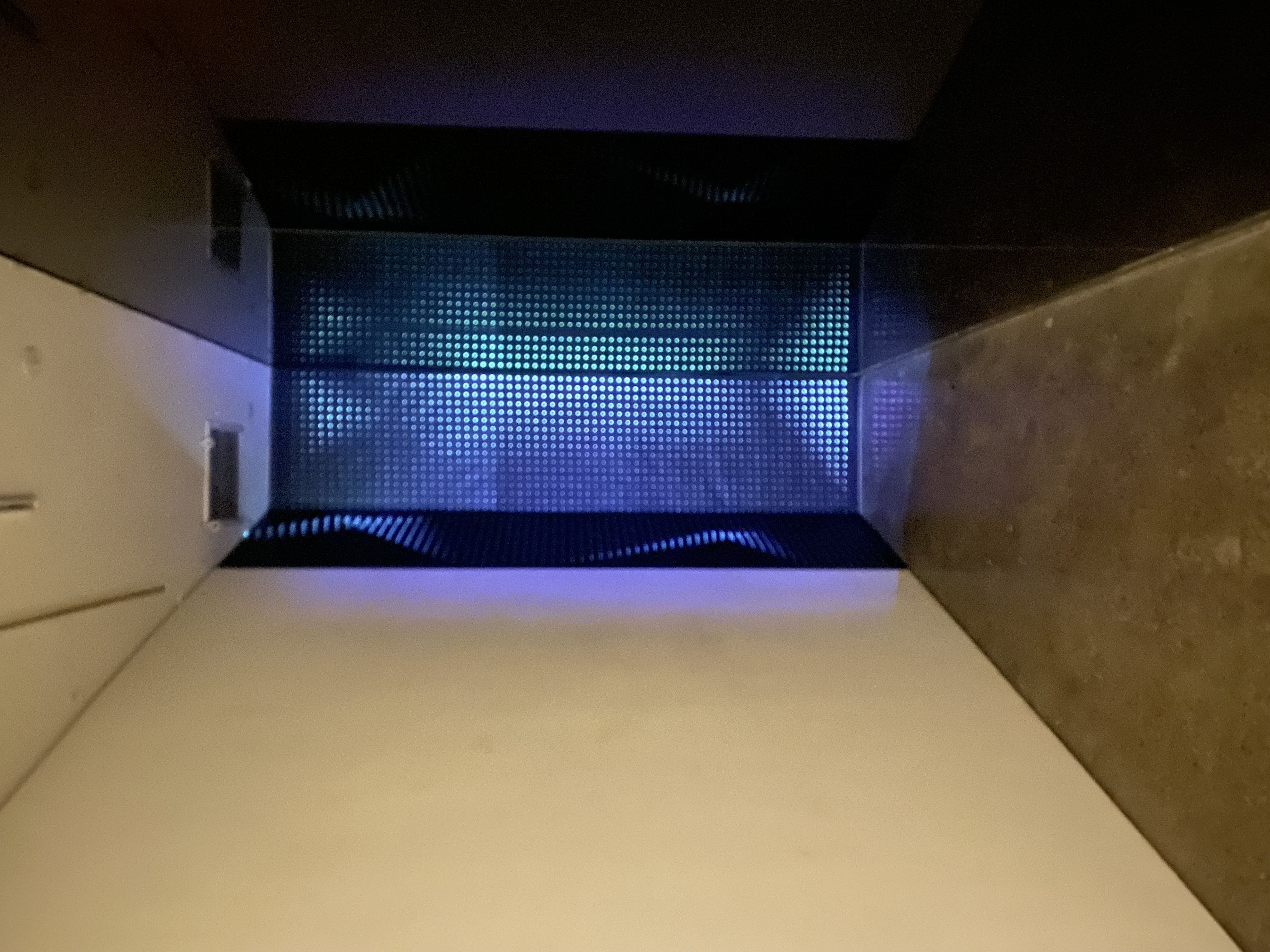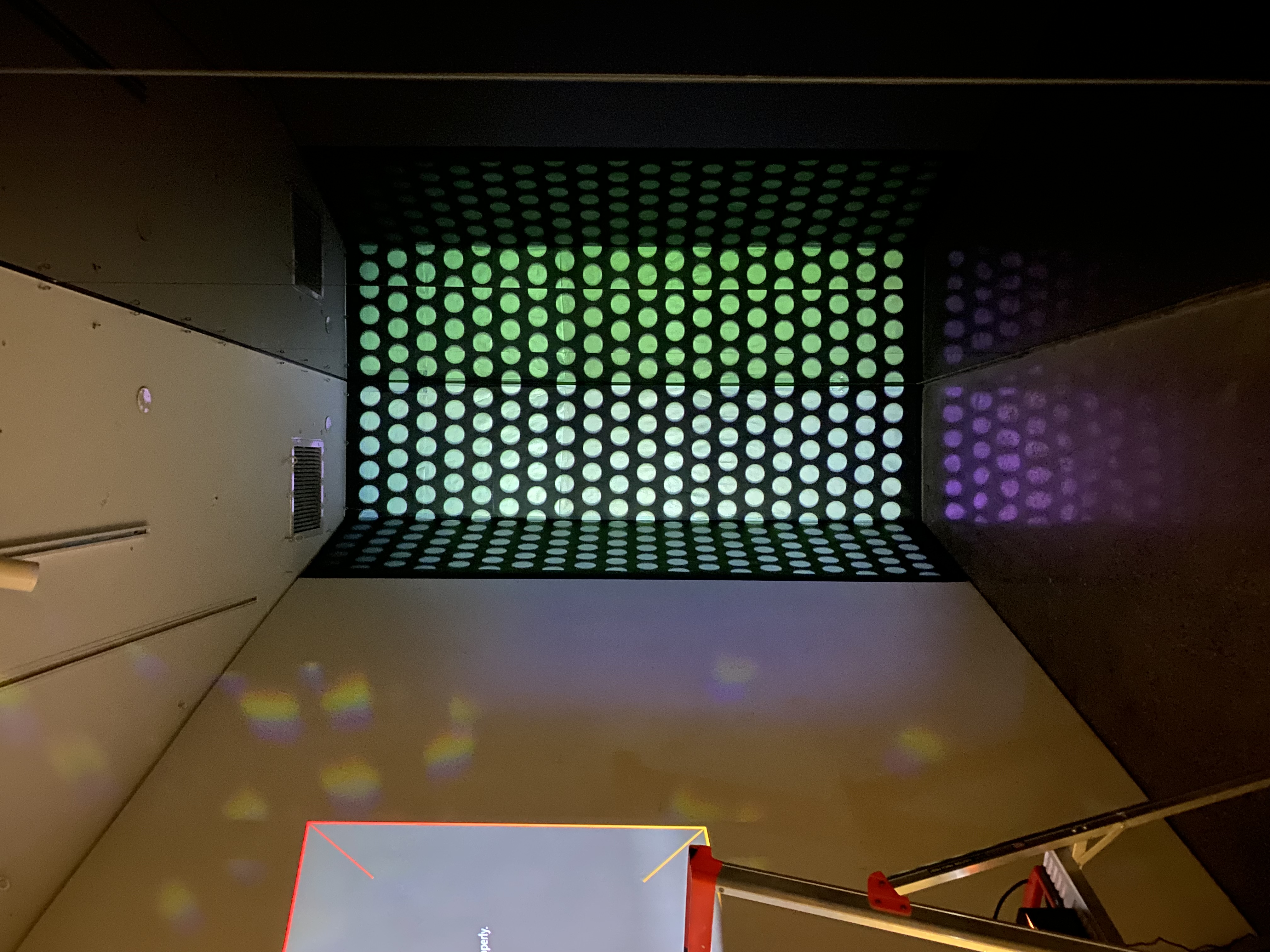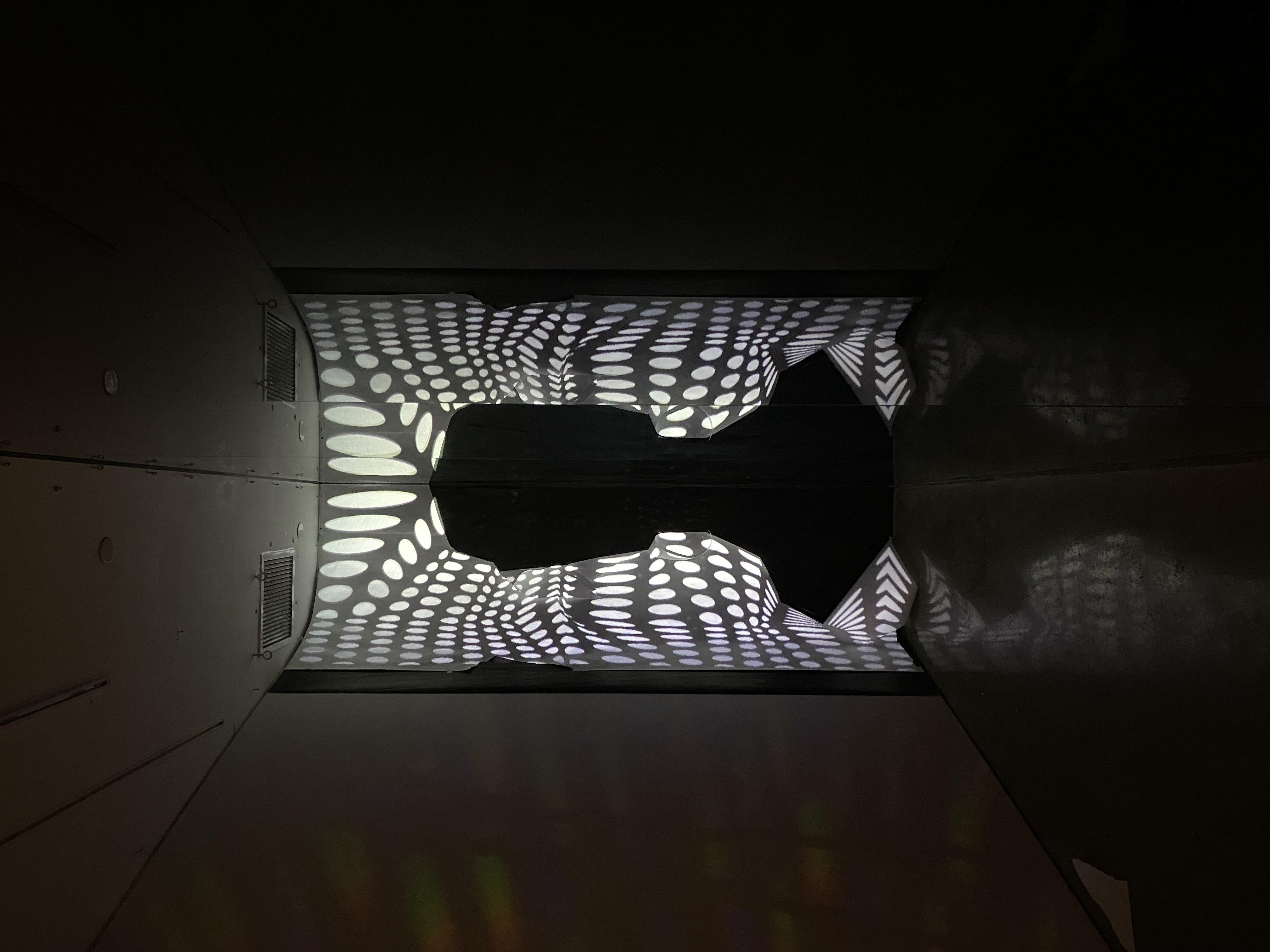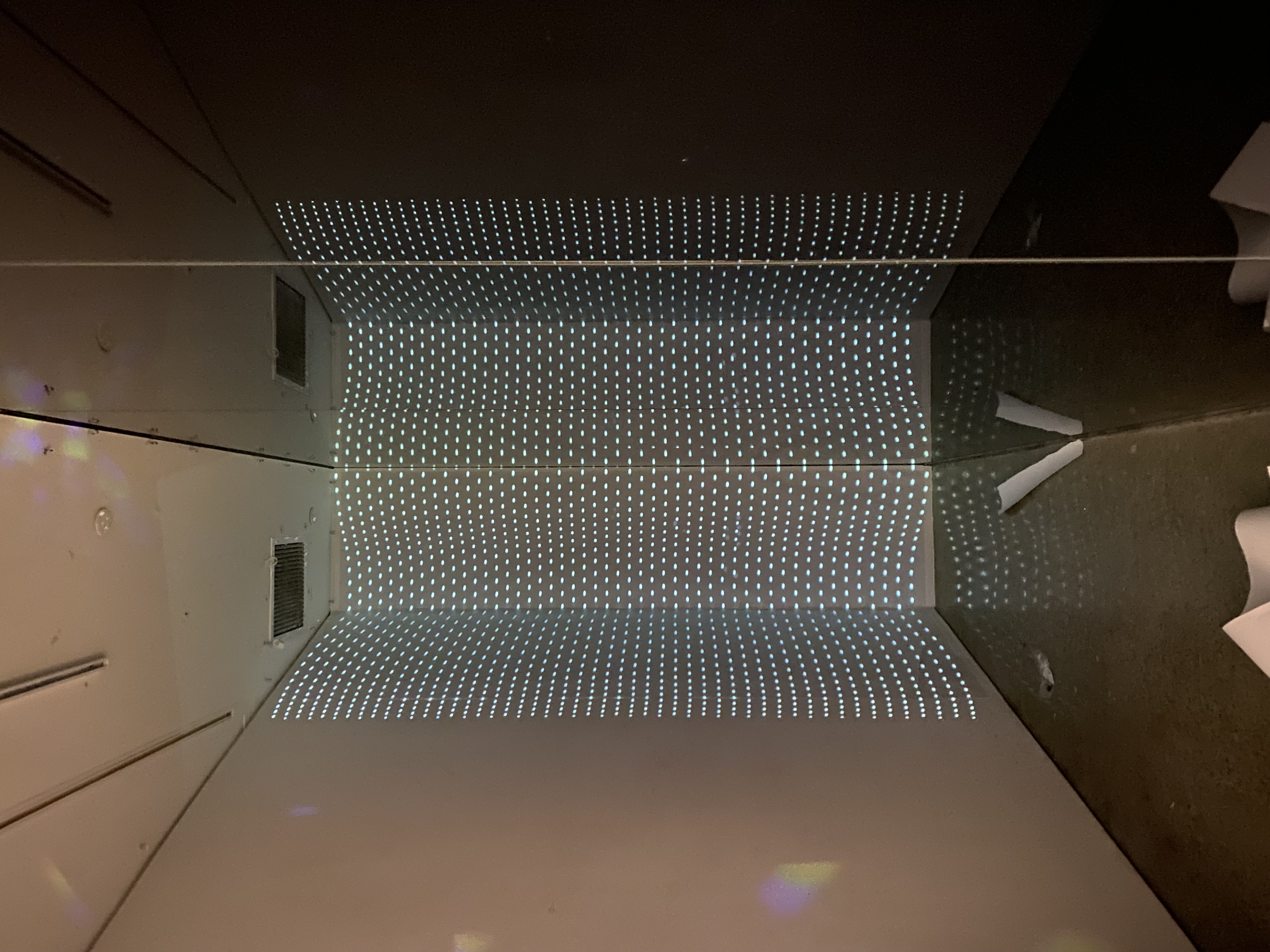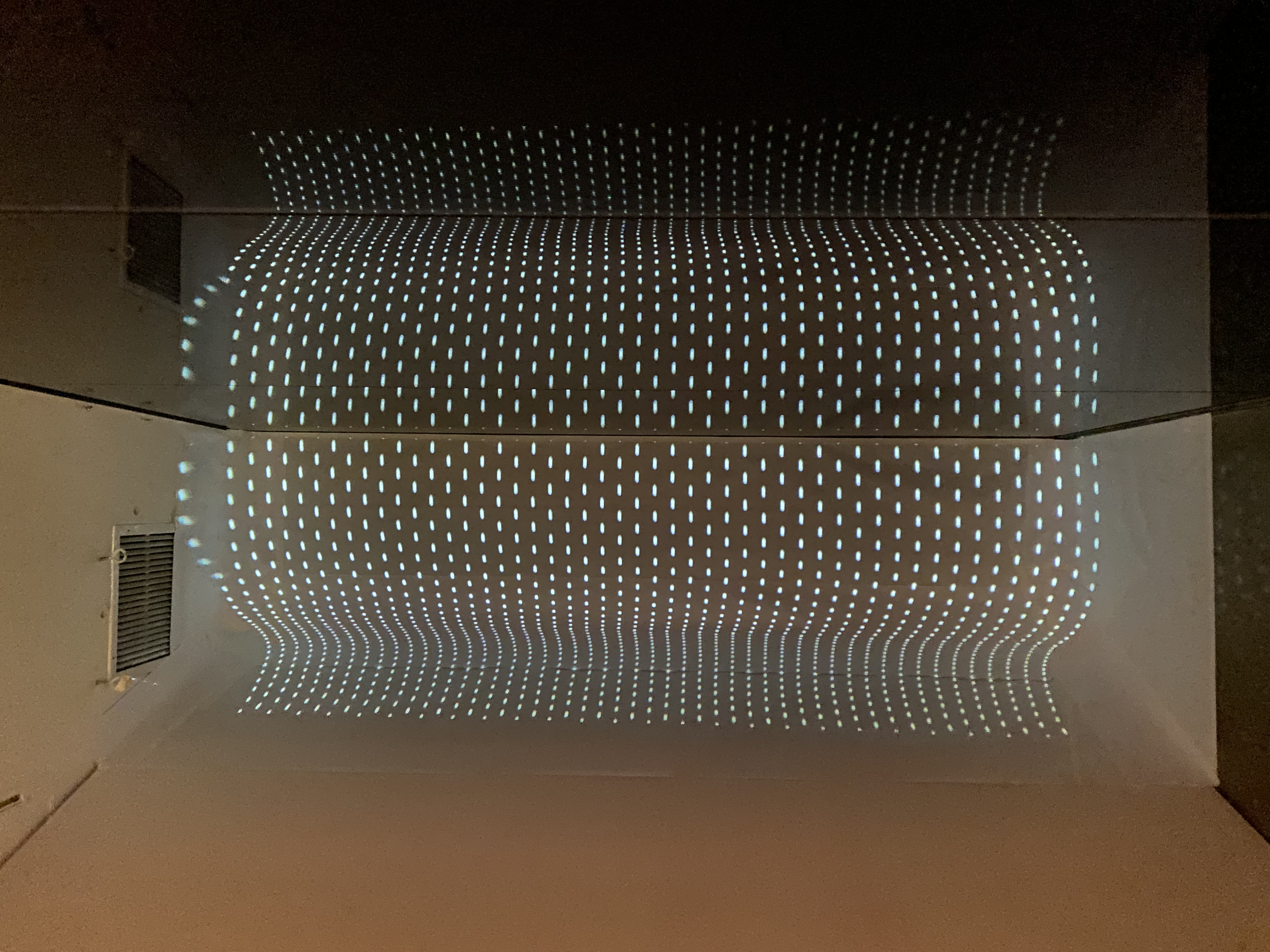
Space in Time is an immersive light installation that explores how perception is constructed through the interaction of sensory input, spatial context, and neural inference. The work transforms a physical room into an experiential field in which light, motion, and reflection generate the illusion of depth and curvature within an otherwise rigid architectural volume.
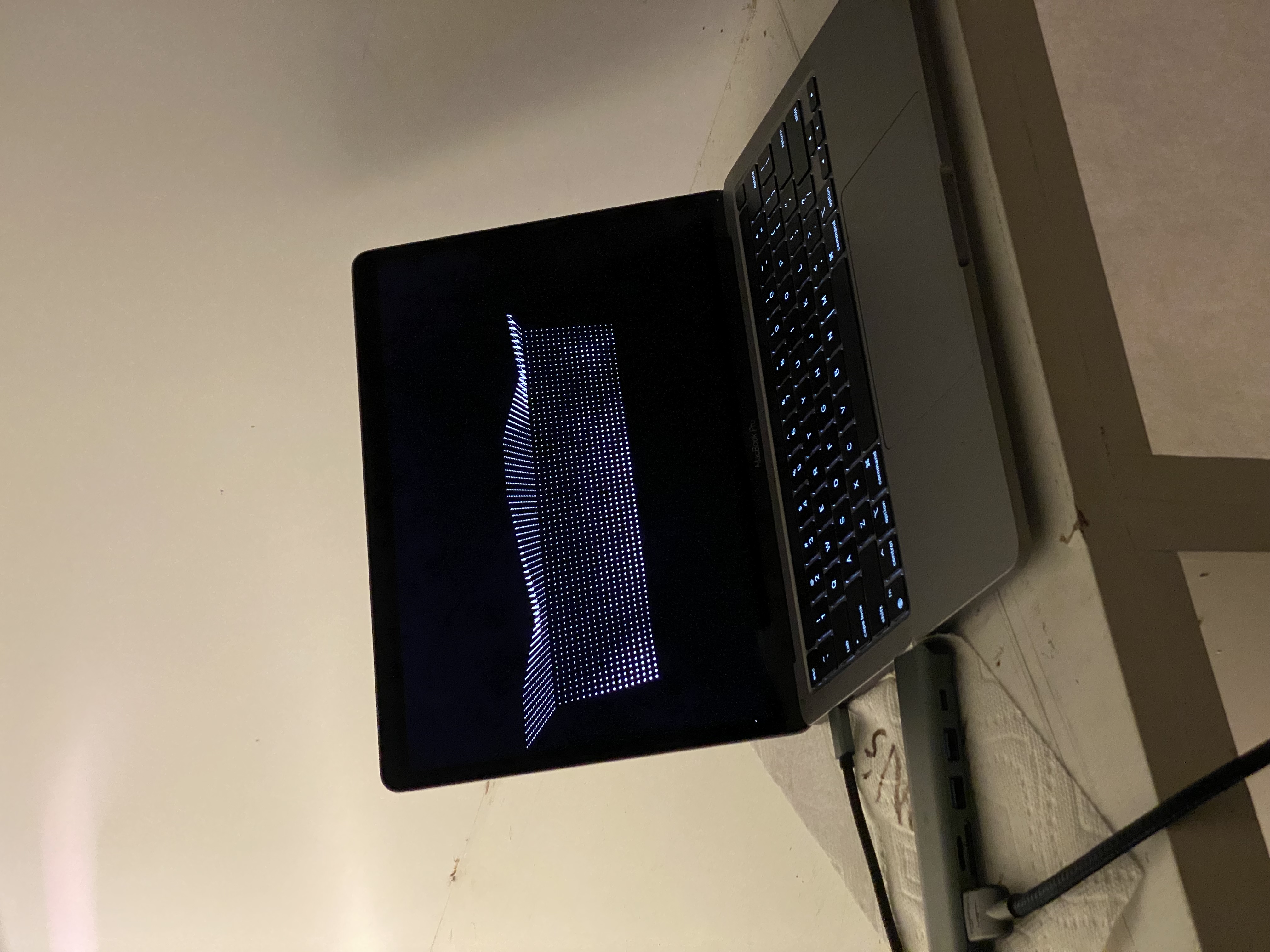
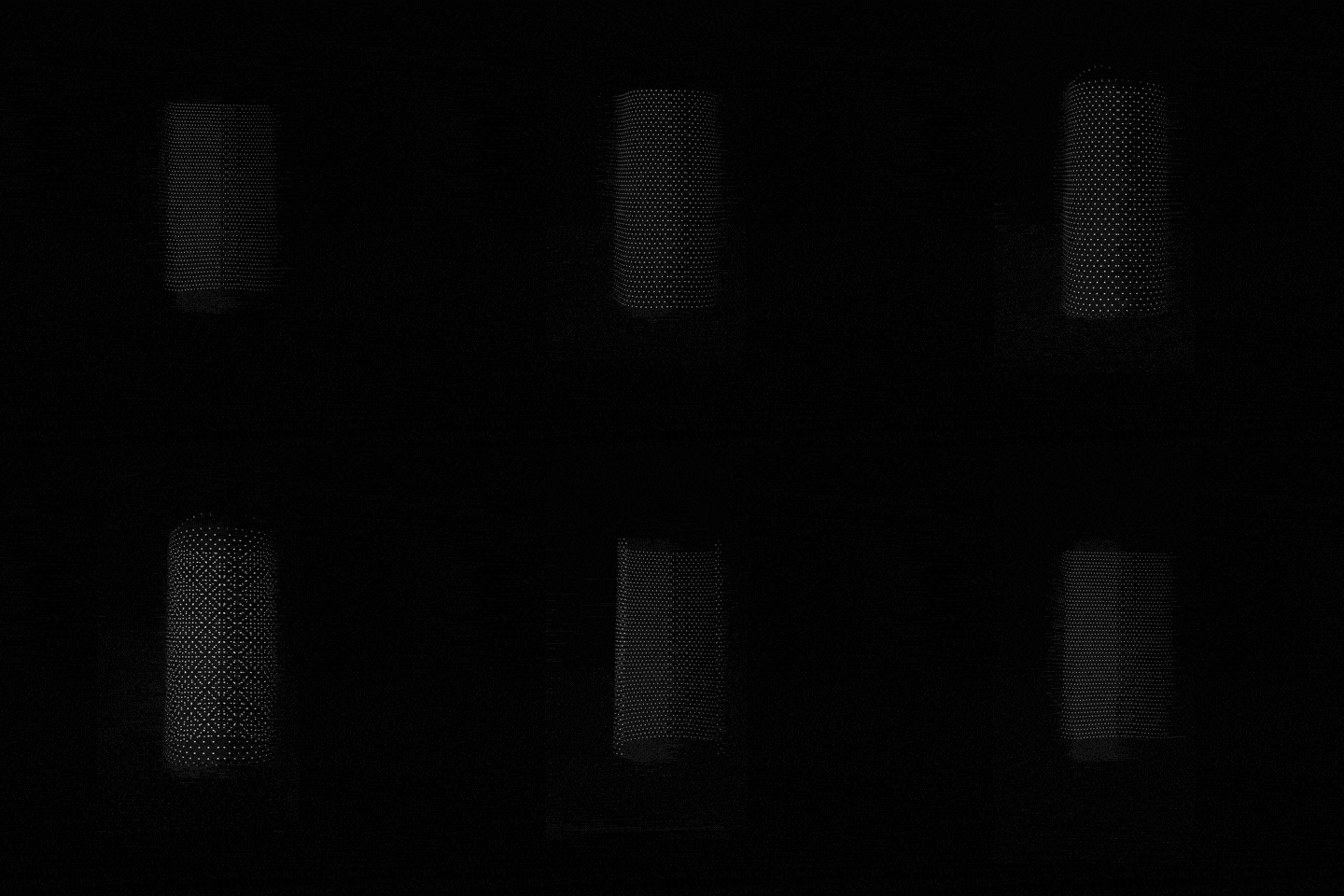
The installation consists of a field of projected points of light mapped across four planar surfaces. These points are arranged in a hexagonal lattice, echoing the structure of rod photoreceptors in the human retina, the cells responsible for low-light vision and sensitivity to contrast rather than color. Through precise control of spacing, motion, and luminance gradients, the projected points produce emergent percepts of curvature, surface continuity, and spatial depth.
A mirrored wall further amplifies the illusion, introducing a symmetrical extension that visually collapses the boundary between physical and virtual space. Together, these elements generate the sensation of a curved, expanding environment within a rigid architectural enclosure. The work lets viewers experience how spatial perception is actively constructed rather than passively received.
Space in Time was created as part of Vision in Art and Neuroscience, a course examining the relationship between visual perception, neuroscience, and artistic practice. The project draws on principles from visual neuroscience (particularly the role of receptive fields, spatial frequency, and perceptual inference) to externalize internal perceptual processes. By transforming computational and neurological concepts into embodied experience, the installation allows viewers to “see seeing” in action.
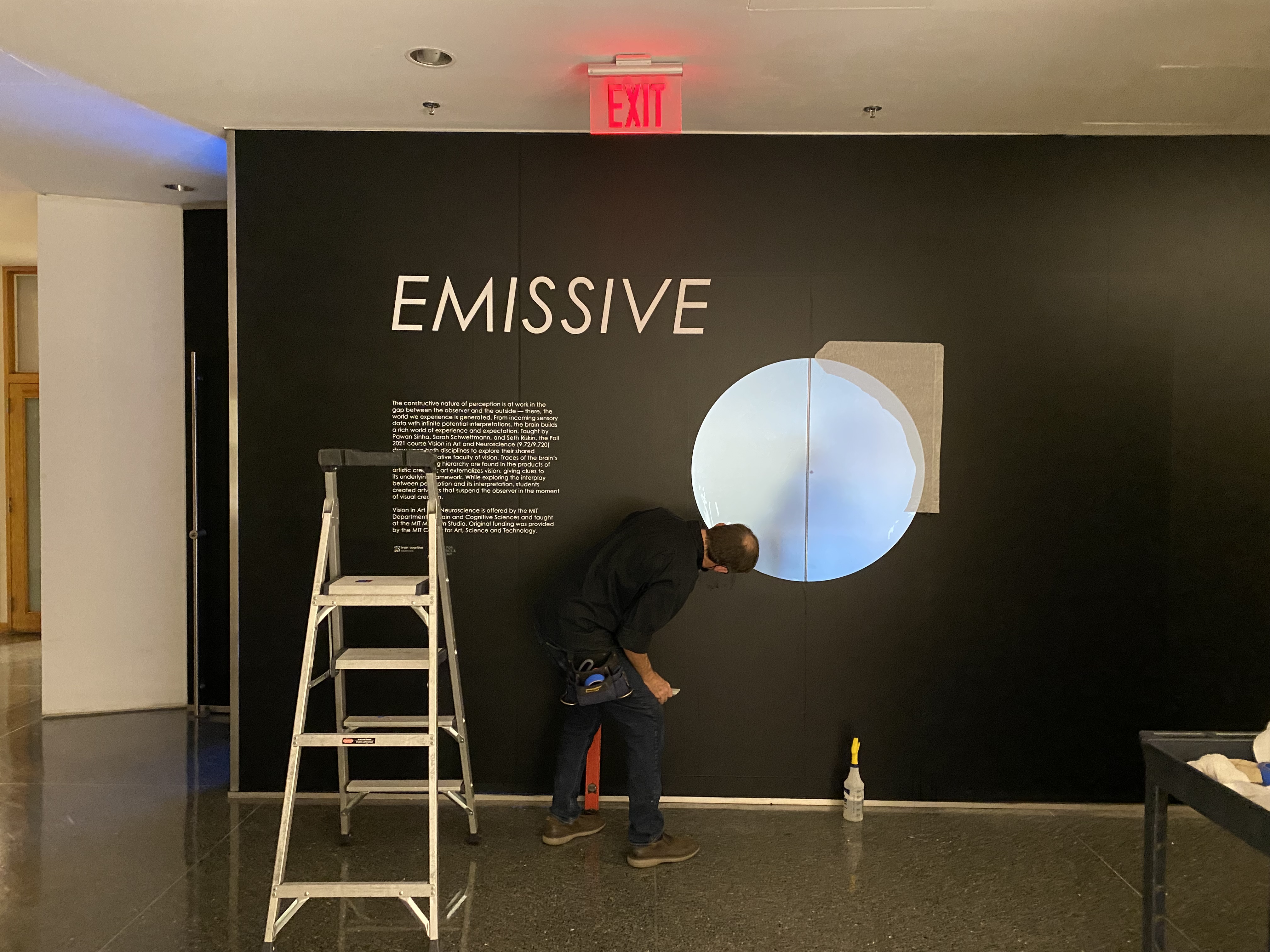
The piece was exhibited at the MIT Museum’s Compton Gallery as part of a larger body of student work exploring perception, illusion, and sensory construction. It reflects an interest in how minimal interventions (light, geometry, and motion) can generate rich perceptual phenomena and challenge assumptions about spatial reality.